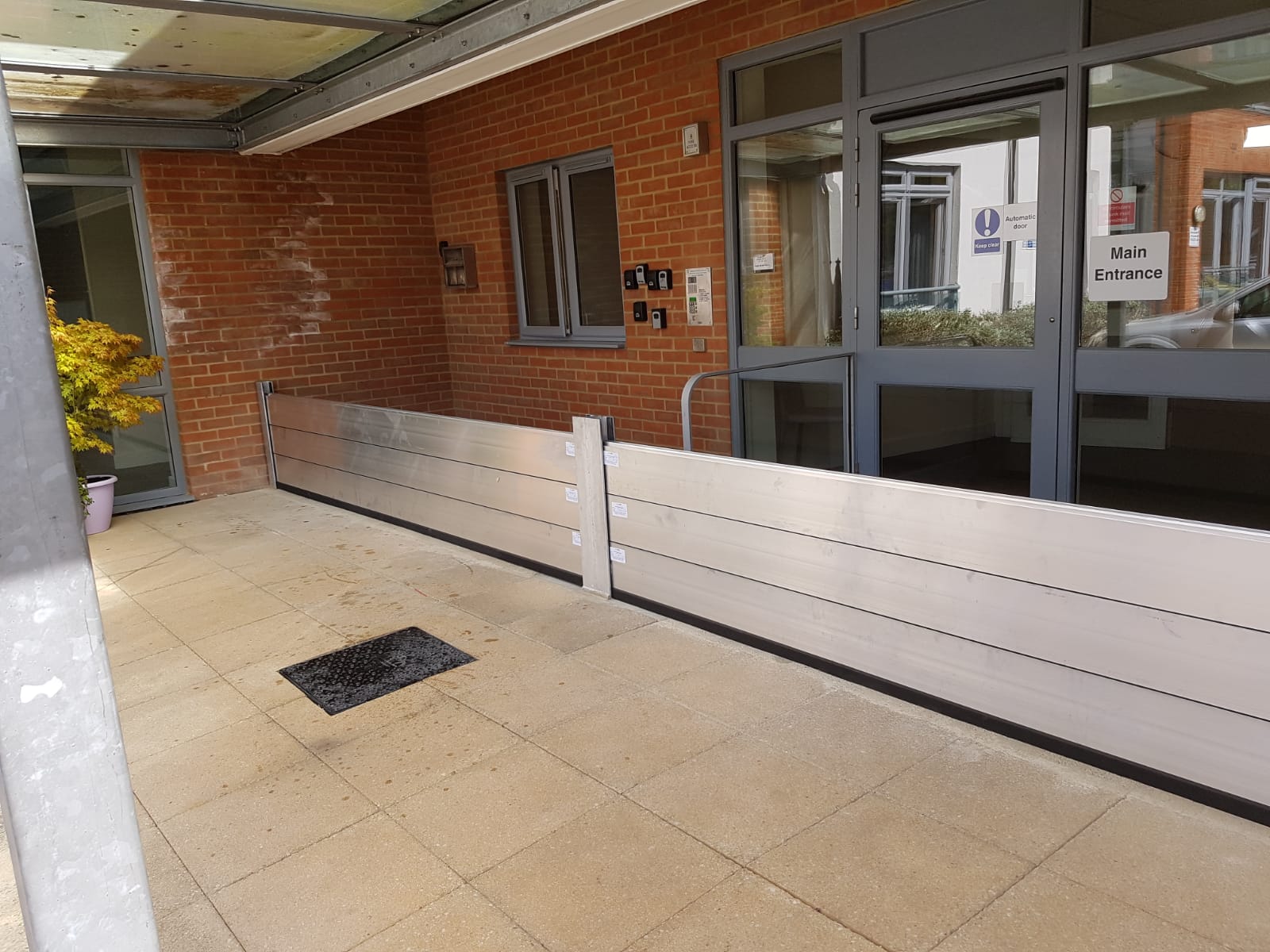
Engineered flood defences to protect critical assets or to build into the architecture
Engineered solutions are provided with engineering calculations as part of a detailed design. Design criteria may include flood depth, waves, currents, wind load or impact according to the reqiured scenario.
Apex produces a range of standardardised products under the Floodguard brand but can also provide bespoke solutions using standard components or special design projects to develop new solutions from scratch.
As part of our service, our design team can work with your architects or consultants to ensure these integrate properly into your scheme whether it be for protecting critical infrastructure, a building development or a community.
Yes. In whatever location they are required we can offer solutions whether they are self-supported, built into external walls of a property or as part of a flood defence wall.
Apex’s engineered solutions include permanent, passive, normally-closed as well as manually-deployed solutions.
Solutions can be produced in aluminium, steel or glass with timber finishing to match any aesthetic requirements.


Floodguard Aluminium Doors & Windows
Assessment of the true cost
Whilst sandbags may on the face of it appear to be a good option with the low upfront cost, the true costs may be much more:
- Plant and depot costs
- Manpower costs (for deployment)
- Transportation costs
- Clean up costs
The biggest cost of this sandbag approach is likely to be that of non-deployment or failure of the flood barrier by being outflanked or over-topped due to the speed or onset or rise of the floodwater. There may simply not be either the human or physical resources available to build a flood barrier of 100metre or mile length fast enough, yet alone in all the locations where this is required. This may see the costs of failure in the millions of dollars or even risk to lives.
These are complex issues for decision-makers but when deciding to invest or not, and when putting together a technical specification, then expertise is required. This will ensure that what is procured will provide the flexibility, durability, safety and speed of deployment required for the scenarios considered. Getting this right will see a focus on the whole-life costs versus the whole-life benefits i.e. the costs of consequential damage as a result of failure or doing nothing.
Apex has attempted to make this simple by bringing together the best-in-class for each flood barrier type, together with a real-time information and an early warning action system. For example, combining our virtual control room with our apex mobile flood barrier Rapidam Rigid, responders can focus on building linear length of barrier quickly and efficiently.
Resource such as additional beams and the requisite manpower can be deployed elsewhere until it is confirmed that the flood defence height should be increased.
Unlike sandbags they are easy to remove without a big clean-up effort and the associated costs and they may be used countless times in their 50 year plus service life.